Your body changed. Your stride may have, too.
I’ve logged miles before, during and after giving birth to all three of my children, and every return felt different. I’ve run with leaking breasts, a core that didn’t feel entirely connected and legs that seemed to have forgotten what running was. I’ve also rushed the process because I missed the version of myself who could lace up and leave without having to coordinate feeds, naps and childcare first.
What I learned is that being “cleared” to exercise and being ready to run are not necessarily the same thing.
Pregnancy and birth can affect your pelvic floor, abdominal muscles, hips, balance, feet, stamina and ability to recover between workouts. Sleep deprivation, breastfeeding, under-fueling and the physical demands of caring for a baby can also change how much exercise your body can comfortably handle.
The newest guidance emphasizes that there is no single postpartum week when every mother suddenly becomes ready to run. Instead, the return should be gradual, individualized and based on healing, symptoms, strength, previous running experience and how the body responds to impact.
This guide covers how to tell when you may be ready, which symptoms mean you should pause and get help, how to ease back in and which 2026 running shoes make the most sense for a postpartum body.
When Can You Start Running After Having a Baby?
There’s no universal answer—not six weeks, eight weeks or even 12 weeks.
After an uncomplicated vaginal delivery, gentle movement such as walking may feel appropriate within days of birth. After a C-section, significant tearing, pelvic-floor injury or another complication, healing may take longer. Running is different from walking because it repeatedly asks your pelvic floor, core, legs and connective tissues to absorb impact.
The Centers for Disease Control and Prevention (CDC) postpartum physical-activity guideline says returning to running is generally considered safe once surgical incisions or perineal tears have sufficiently healed and vaginal bleeding does not increase with moderate-to-vigorous activity. It also stresses that progression should be gradual, symptom-based and personalized.
In other words, your postpartum appointment may confirm that you aren’t experiencing a medical complication, but it does not automatically test whether your body can comfortably manage running. A six-week clearance should be treated as one part of the decision—not a starting pistol.
Your delivery matters, but it is not the only factor. Someone recovering from an uncomplicated C-section may eventually feel stronger than someone who had a vaginal delivery involving a significant tear, prolapse symptoms or pelvic-floor trauma. Your running history, current strength, sleep, mental health, feeding demands and access to support matter, too.
What to Look for in Postpartum Running Shoes
You might need to test out a few pairs before finding the one that feels just right. Some moms may need extra arch support to make up for the hormonal shifts that loosen joints and ligaments during pregnancy. Others might prioritize cushioning to ease pressure on knees and hips that still feel out of alignment. Maybe you’re looking for a wide toe box to accommodate lingering swelling—or a shoe that’s easy to slip on when your hands are full (because when aren’t they?). The best postpartum running shoe is the one that supports where your body is now—not where it used to be. Choose a pair that makes you feel strong, steady and ready to move—however that looks today.
Consider the following:
- Arch support (especially for flat feet or overpronation)
- Cushioning for joint impact
- Wider toe boxes
- Breathable, lightweight design
- Compatibility with orthotics if needed
- Slip-on or easy to lace for mom life
The Best Running Shoes for Postpartum Moms:
- Best overall: ASICS Novablast 5
- Best stability shoe: Brooks Adrenaline GTS 25
- Best for wide or changed feet: New Balance 1080v15
- Best maximum cushioning: Brooks Glycerin Max 2
- Best for walking before running: Hoka Bondi 9
- Best lightweight daily trainer: Saucony Triumph 23
- Best easy-on option: Nike Pegasus 42 EasyOn
- Best rocker-bottom shoe for postpartum walking: MBT 2000
Best Overall Postpartum Running Shoe: Asics Novablast 5
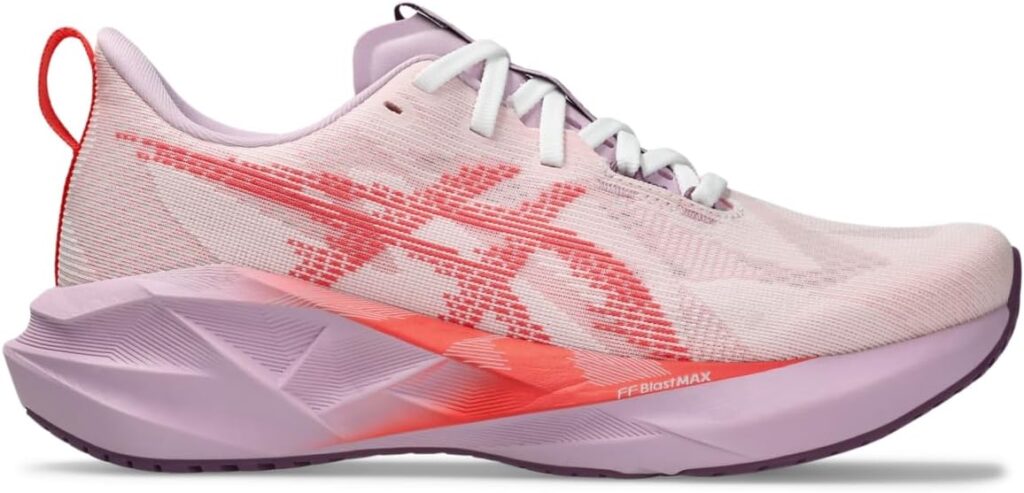
The Novablast 6 is the strongest update to the original list. It has enough cushioning to make easy pavement miles feel forgiving but remains lighter and more energetic than many maximum-cushion shoes.
ASICS added FF BLAST MAX foam and a responsive forefoot pod while updating the outsole for additional traction. At 7.6 ounces with an 8-millimeter drop, it is light enough for everyday runs without feeling like a stripped-down racing shoe. It is also available in a wide version.
This is best for someone who already feels reasonably steady and wants one shoe for walk-run intervals, easy miles and eventually faster sessions.
What We Love
- Cushioned without being especially heavy
- Responsive enough to grow with your running
- Wide sizing available
- Improved outsole traction
What We Would Change
The bouncy ride may not feel grounded enough for someone who currently feels unstable or wants substantial guidance underfoot.
Quick Facts
- Weight: 7.6 ounces
- Drop: 8 millimeters
- Support: Neutral
- Best for: Everyday runs, walk-run intervals and moderate-distance training
- MSRP: $155
BUY NOW
Best Postpartum Stability Shoe: Brooks Adrenaline GTS 25
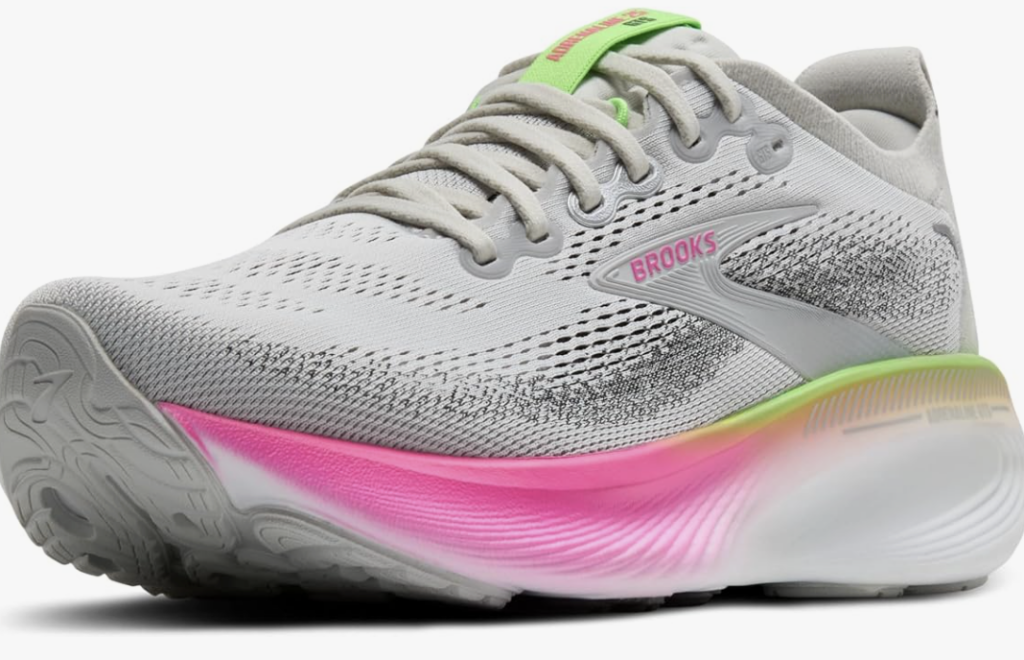
The Adrenaline GTS 25 is the pair I would choose for a runner who feels more comfortable with noticeable structure underfoot.
Brooks uses its GuideRails system to limit excess movement without relying on the hard medial posts found in older stability shoes. The latest model has a 10-millimeter drop, weighs 9.5 ounces and is intended for both road running and walking. It is also available in multiple widths.
It’s not a treatment for overpronation, knee pain or postpartum instability, but its secure fit and predictable ride may feel reassuring when your gait still feels unfamiliar. Whether you’re logging miles, power walking with a baby carrier, or just craving stability while rebuilding your stride, this shoe is ready for your comeback.
What we love:
- Structured, steady feel
- Works for both walking and running
- Multiple width options
- Comfortable for everyday wear
What we would change:
- It’s heavier and less playful than the Novablast, and runners who prefer a flexible neutral shoe may find it overly structured.
Quick Facts:
- Weight: 9.5 ounces
- Drop: 10 millimeters
- Support: Stability
- Best for: Walk-run intervals, daily runs and runners who prefer more structure
- MSRP: $155
BUY NOW
Best for Wide Postpartum Feet: New Balance 1080v15
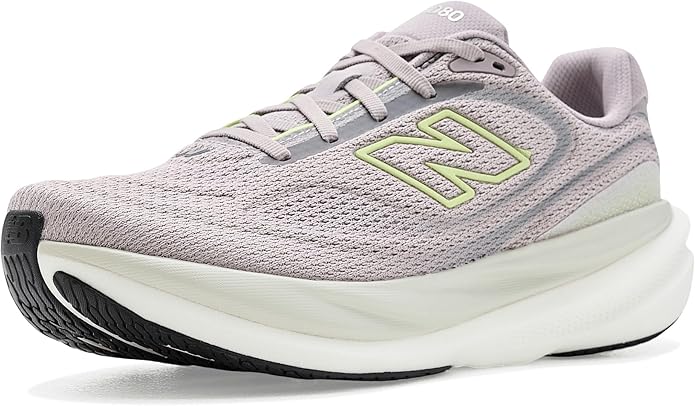
If pregnancy left your feet wider, longer or simply incompatible with your old shoes, the 1080v15 offers the most inclusive fit range in this roundup.
The women’s version comes in narrow, standard, wide and extra-wide widths. It weighs 7.3 ounces and uses New Balance’s Infinion midsole foam for soft cushioning with more energy return than previous versions.
It feels plush without being as heavy as many highly cushioned shoes, making it useful for walking, easy running and longer daily mileage once you have rebuilt your endurance.
What We Love
- Narrow through extra-wide sizing
- Very lightweight for its cushioning level
- Soft enough for walking and recovery runs
- Roomier option for feet that changed during pregnancy
What We Would Change
The 6-millimeter drop may ask slightly more of the calves than a traditional 10- or 12-millimeter daily trainer, particularly if you are switching from a higher-drop shoe.
Quick Facts
- Weight: 7.3 ounces
- Drop: 6 millimeters
- Support: Neutral
- Best for: Wide feet, easy runs, walking and longer daily miles
- MSRP: $169.99
BUY NOW
Best Max-Cushion Postpartum Running Shoe: Brooks Glycerin Max 2
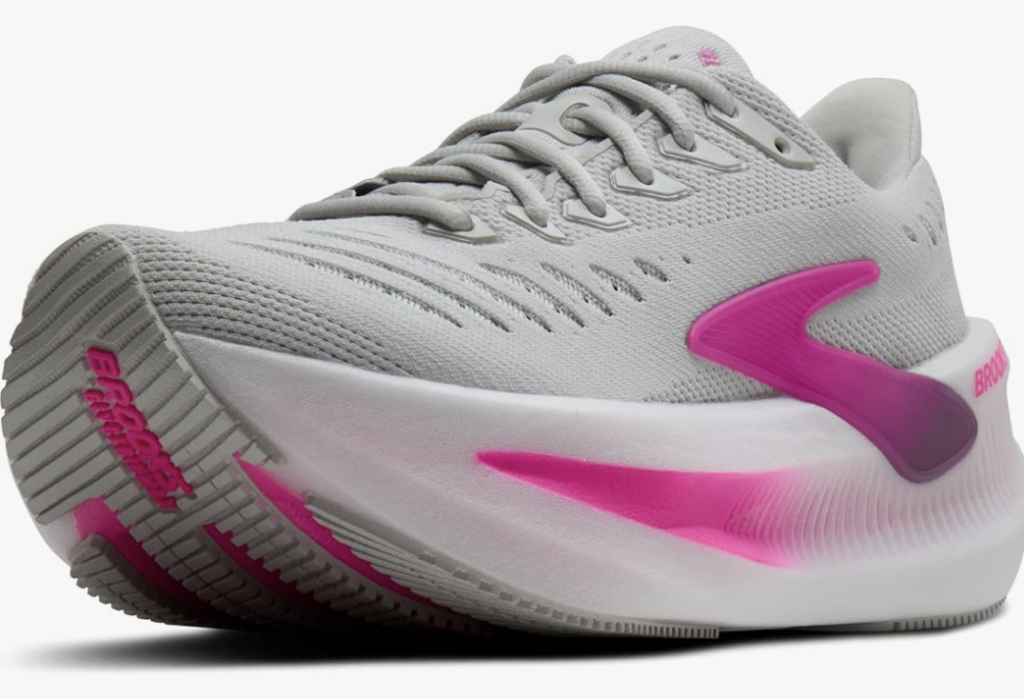
The Glycerin Max 2 is for the runner whose main request is: Please make the pavement feel less pavement-y.
Its thick DNA TUNED midsole combines softer cushioning at the heel with a firmer, more responsive forefoot. Brooks also uses a curved rocker to help the foot move from landing to toe-off. It weighs 10.2 ounces and has a 6-millimeter drop.
This is a substantial shoe, but the broad platform feels more controlled than some ultra-soft trainers. It works particularly well for walking, easy miles and recovery runs once you are tolerating impact comfortably.
What We Love
- Very generous cushioning
- Broad, substantial platform
- Smooth rocker for walking and easy running
- Comfortable for long periods on your feet
What We Would Change
It is heavy, expensive and decidedly not minimalist. The pronounced rocker may also feel unnatural to someone accustomed to a flatter, more flexible shoe.
Quick Facts
- Weight: 10.2 ounces
- Drop: 6 millimeters
- Support: Neutral with a broad platform
- Best for: Walking, easy miles and recovery runs
- MSRP: $200
BUY NOW
Best for Walking Before Returning to Running: Hoka Bondi 9
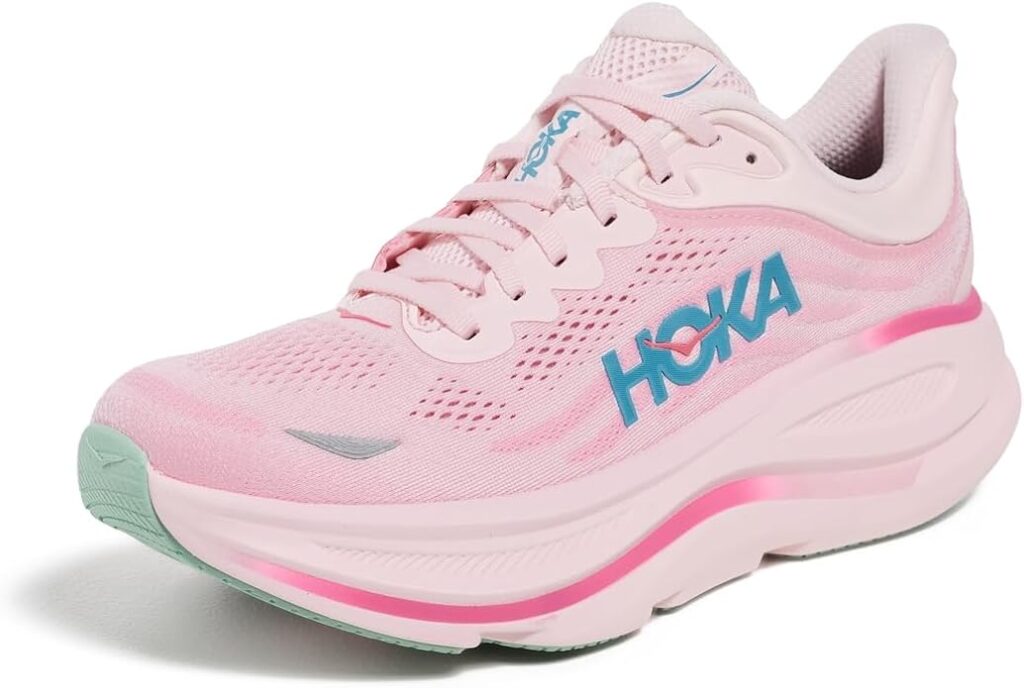
The Bondi 9 makes the most sense for the stage when you are logging stroller walks, gradually building endurance and sprinkling in short jogging intervals.
Hoka increased the stack height and updated the foam while retaining the plush ride for which the Bondi is known. The women’s version weighs approximately 9.3 ounces and has a 5-millimeter drop.
It provides plenty of cushioning, but do not assume that its size makes it the most stable option for every runner. Try it before committing, especially if tall shoes make you feel unsteady.
What We Love
- Plush cushioning for walking and easy running
- Comfortable collar and breathable upper
- Durable outsole in high-wear areas
- Works well for long stroller walks
What We Would Change
It is bulky, and the lower drop may increase calf demand for runners accustomed to higher-drop shoes.
Quick Facts
- Weight: Approximately 9.3 ounces
- Drop: 5 millimeters
- Support: Neutral
- Best for: Walking, recovery days and gradual walk-run programs
- Typical MSRP: Around $170
BUY NOW
Best Lightweight Daily Trainer: Saucony Triumph 23
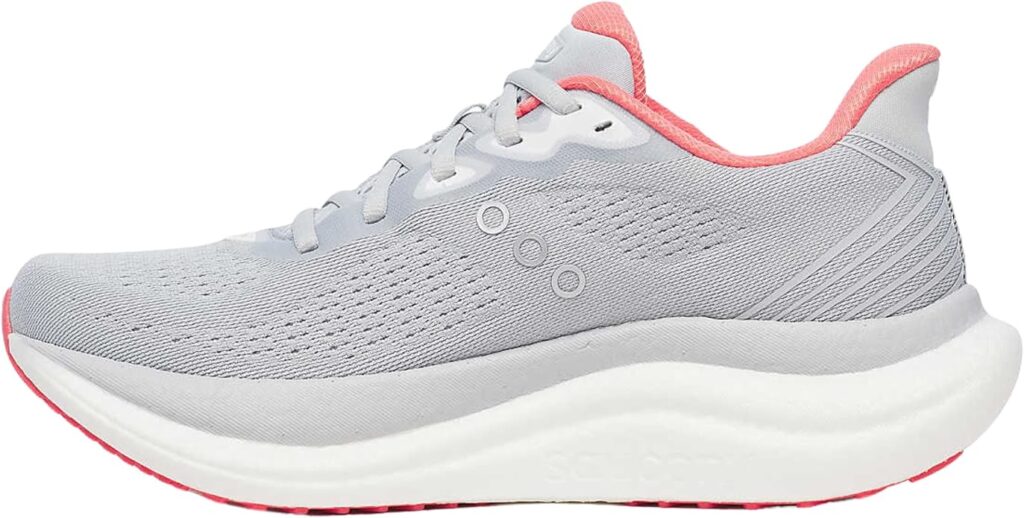
The Triumph 23 gives you generous cushioning without the heft of the Glycerin Max or Bondi.
It uses Saucony’s PWRRUN PB foam, weighs 8.4 ounces and has a familiar 10-millimeter drop. A wide version is also available. That combination makes it a relatively easy transition for someone returning to running in a traditional daily trainer.
It has enough softness for easy days but does not lock you into a bulky recovery-shoe feel once your running begins to progress.
What We Love
- Lighter than many cushioned trainers
- Traditional 10-millimeter drop
- Standard and wide options
- Versatile enough for easy runs and longer distances
What We Would Change
It does not provide the noticeable guidance of the Adrenaline, and some runners may want a wider, more planted platform during their earliest walk-run sessions.
Quick Facts
- Weight: 8.4 ounces
- Drop: 10 millimeters
- Support: Neutral
- Best for: Daily training, easy runs and increasing mileage
- MSRP: $170
BUY NOW
Best Easy-On Postpartum Running Shoe: Nike Pegasus 42 EasyOn
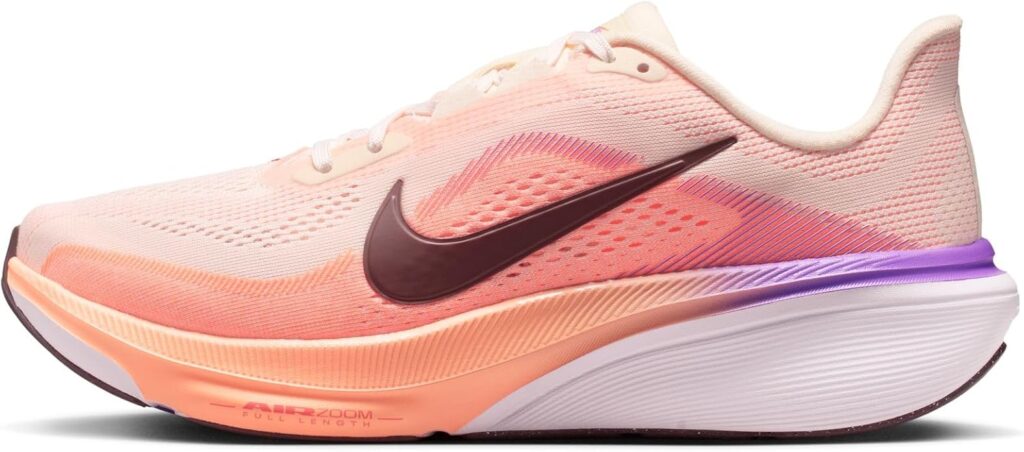
When you are holding a baby, carrying a pump bag or trying to get out the door before someone wakes up, a hands-free-ish entry is not a ridiculous thing to prioritize.
The Pegasus 42 EasyOn has a collapsible heel and adjustable hook-and-loop closure, so you can step in without completely relacing it every time. Nike also widened the toe and forefoot compared with the Pegasus 41. The shoe weighs 8.9 ounces and has a 10-millimeter drop.
It is a legitimate daily running shoe—not merely a slip-on lifestyle sneaker—and the moderate cushioning works for walks, gym sessions and easy runs.
What We Love
- Easier to put on while your hands are full
- Wider forefoot than the previous Pegasus
- Versatile for running, walking and the gym
- Familiar 10-millimeter drop
What We Would Change
The hook-and-loop system gives you less precise control than traditional lacing, which may matter if your feet are different sizes or you need specific midfoot lockdown.
Quick Facts
- Weight: 8.9 ounces
- Drop: 10 millimeters
- Support: Neutral
- Best for: Everyday runs, walks and quick transitions out the door
- MSRP: $145
BUY NOW
Best Rocker-Bottom Shoe for Postpartum Walking: MBT-2000
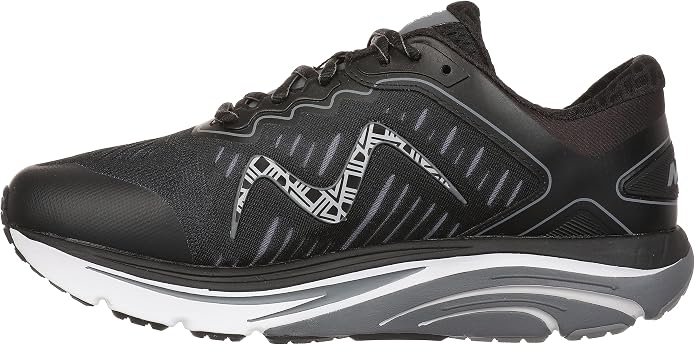
The MBT-2000 is best suited to the walking-before-running stage, when you’re building endurance through stroller walks, fitness walking and long days on your feet. Unlike a traditional flat-soled sneaker, it has a moderately curved rocker platform designed to encourage a smoother rolling motion from heel to toe.
Its Level 2 rocker construction includes a pivot point beneath the midfoot and a negative-heel design intended to promote forward movement and an earlier toe-off. The shoe also has a breathable engineered-mesh upper, an Ortholite insole and a reinforced heel structure to help keep the rearfoot secure.
The rocker may make walking feel smoother for some people, particularly during longer outings, but it is a very different sensation from a conventional running shoe. Introduce it gradually rather than wearing it for an entire day—or attempting a run—the first time you put it on.
What We Love
- Curved rocker encourages a smooth heel-to-toe transition
- Cushioned enough for longer walks and extended time on your feet
- Breathable upper
- Reinforced heel helps create a secure fit
- Useful for stroller walks, travel and everyday mileage
What We Would Change
The pronounced rocker and negative-heel construction may feel unfamiliar or unstable to some people. Although MBT has categorized versions of the MBT-2000 as running shoes, the current U.S. product description emphasizes performance walking. I would treat it primarily as a walking and everyday-movement shoe rather than your go-to pair for rebuilding continuous running mileage.
Quick Facts
- Rocker level: MBT Level 2
- Upper: Engineered mesh
- Insole: Ortholite
- Best for: Fitness walking, stroller walks, travel and long days on your feet
- Current U.S. price: $187
BUY NOW
Frequently Asked Questions
Is Six Weeks Postpartum Too Soon to Run?
For many people, it may be. Six weeks is not a universal running-readiness deadline. Your delivery, healing, symptoms, strength, previous training and ability to tolerate impact all matter. Some people may begin running within the first 12 weeks, while others need substantially longer.
Can I Run After a C-Section?
Yes, many people return to running after a C-section. The incision should be sufficiently healed, and running should not cause scar pain, increased bleeding, pelvic symptoms or other concerning symptoms. Because a C-section is abdominal surgery, rebuilding trunk and lower-body strength gradually is important.
Can I Run With Diastasis Recti?
Diastasis recti alone does not automatically prohibit running. What matters is how well you manage pressure and impact and whether you experience pain, significant doming, pelvic-floor symptoms or loss of control. A pelvic-floor or postpartum physical therapist can assess your function rather than judging readiness solely by the width of the abdominal gap.
Read: Postpartum Recovery Tips You’ve Never Heard Before
Is It Normal to Leak Urine While Running Postpartum?
It is common, but it should not be dismissed as an unavoidable part of motherhood. Leakage is a reason to adjust your training and consider an evaluation from a pelvic-floor physical therapist.
Will Running Affect My Milk Supply?
Regular aerobic exercise has not been shown to harm milk production, milk composition or infant growth. Adequate food, fluids and recovery are still essential, particularly because lactation increases energy requirements. Feeding or pumping before exercise may also make running more comfortable.
Read: Feeding Without Shame: Why Combo Feeding Was the Best Choice for My Mental Health
Do I Need New Running Shoes After Pregnancy?
Not automatically, but you should reassess the fit. Pregnancy can change foot length, width and arch structure, and some changes may persist after birth. If your old shoes feel cramped, unstable or uncomfortable, remeasure your feet rather than assuming you still wear the same size.
The Bottom Line
Running after having a baby is not about getting your old body back. It is about rebuilding enough strength, coordination and capacity to run comfortably in the body you have now.
Start with walking. Add strength work. Introduce impact gradually. Leave recovery days between runs, and pay attention to what happens during the workout and later that day—not just whether you managed to finish.
And buy shoes for your current feet and current running, not for the mileage, pace or shoe size you had before pregnancy.
The right pair can make running feel more comfortable and secure. It cannot rush healing—and you do not need to rush it, either.