Editor’s note: This essay includes discussion of postpartum mental-health struggles and suicidal thoughts.
I arrived home just as the sun was coming up, completely exhausted.
The birth itself had gone well, but all night I’d been stuck on this irrational fear that the baby was going to die. A couple of times, the heart rate dipped and my stomach dropped right along with it.
“Baby’s probably just pinching the cord,” my trusty assistant said with a reassuring wink. She was probably right. Still, I had started relying on her calm more than I wanted to admit because mine was getting harder and harder to find.
By the time I got home, all I wanted to do was sleep. My three daughters would be awake any minute, but thankfully my partner got them up and took them out. I took a hot shower, climbed into bed and thought, Finally.
Except my brain had other plans. There was the laundry, the dishes, the homeschool co-op application an ultrasound I needed to order… every stupid little thing I had to remember suddenly felt urgent.
I tried everything I could think of to sleep—more hot showers, yoga nidra, lavender oil, acupuncture, Reiki, melatonin. Eventually I tried Benadryl and finally got six glorious hours.
Read: Postpartum Recovery Tips You’ve Never Heard Before
When I woke up, I was groggy and relieved, but there was also this awful realization: I had gotten a break from my life for a few hours, and now I was right back in it.
What made the whole thing even harder to understand was that I was a midwife. I had attended more than 1,200 births. Women had trusted me during some of the most vulnerable moments of their lives, and somehow I had absolutely no idea what was happening to me.
This wasn’t even my first baby. This was number three. I had spent nearly two decades supporting women through pregnancy, birth, breastfeeding and postpartum recovery. I knew hormones and newborns. I knew how to recognize and treat a hemorrhage. I knew what to say to a nervous father and how to stay grounded when a mother was scared.
I really thought I understood motherhood. What I didn’t understand was matrescence. I knew postpartum, but I didn’t know what it could do to me.
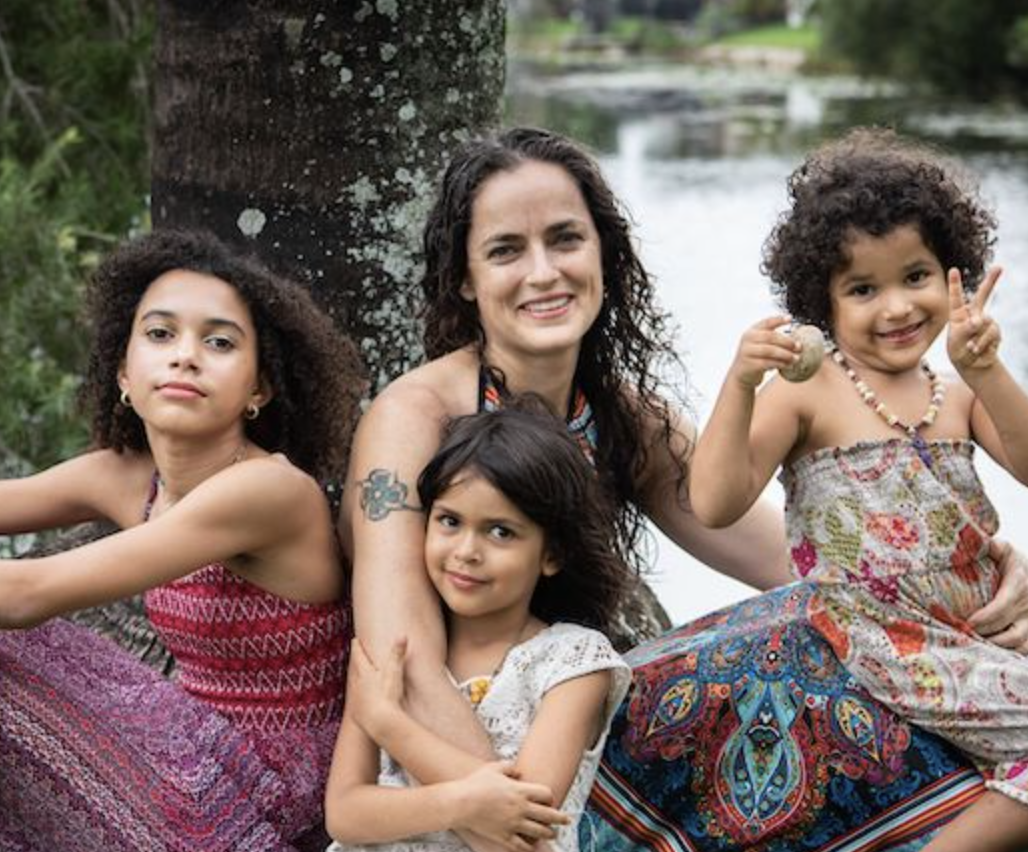
After Amaya was born, everything seemed to collide at once. I was postpartum and moving into perimenopause. Money was tight. My relationship was falling apart. My hormones were all over the place, and I barely recognized myself.
I had planned to pay another midwife to attend births for me so I could actually take a babymoon. But I was the sole financial provider for my family, so staying home wasn’t really an option. I went back to work, sometimes with Amaya strapped to my back, hoping she wouldn’t start fussing at the worst possible moment.
I was so tired I could feel it in my bones. I would snap at my older girls and then feel horrible about it for hours.
The first time I left the house after Amaya’s birth was to take her to a craniosacral therapist because her latch was shallow. At that point, it felt like every other week I had fever, exhaustion and breast pain.
I sat down in the therapist’s office and suddenly everything happened at once. I bled through my pad. Milk leaked through my clothes. Loose yellow baby poop escaped Amaya’s oversized cloth diaper and ended up all over my pants. I just burst into tears.
There I was, a midwife and a mother of three, covered in basically every bodily fluid motherhood could produce. I knew how ridiculous the scene probably looked, but in that moment it felt like a perfect picture of my life. I could not contain anything anymore.
Read: Doula vs. Midwife: How to Know Who to Choose for Your Birth Team
Even when Amaya slept, I often couldn’t. My nervous system felt permanently switched on. But the thing that scared me most wasn’t the sleep deprivation. It was that I had stopped caring about the work that had once made me feel most like myself.
Midwifery had been my calling since I was a young girl. Suddenly I couldn’t imagine how I was supposed to keep doing it. I felt completely unmoored.
The shame made everything worse
There was so much shame wrapped up in what I was going through.
I was the midwife. I was supposed to know this stuff. I was supposed to be the calm person in the room, the person other mothers trusted when they were scared or overwhelmed.
So what did it say about me that I couldn’t seem to handle my own postpartum experience?
My inner critic had plenty to say.
You should know better.
How could you be falling apart?
You’re a terrible mother.
The more ashamed I felt, the harder it became to tell anyone what was really happening. I suffered mostly alone for nearly a year.
Then one afternoon, I took the girls to the children’s museum. We were standing on a platform waiting for the Miami Metrorail, and I remember the August heat feeling almost suffocating. I was exhausted. My anxiety was through the roof.
And I didn’t want to be alive anymore.
I looked down at the busy freeway below us and thought, I could just jump.
My heart was pounding so loudly I could hear it in my ears. My stomach turned.
Then I looked at my daughters.
That was the moment I knew I couldn’t keep trying to muscle through this by myself.
I borrowed money from my family and finally got help.
Healing was not quick, and it definitely wasn’t linear. But somewhere along the way, I came across a word I had somehow never heard before.
Matrescence.
Finally, there was a word for it
Matrescence is the developmental transition of becoming a mother—the physical, psychological, social and identity changes that can come with it. Anthropologist Dana Raphael introduced the term in the 1970s.
I learned about it in 2017, after I had already been a midwife for 18 years.
I remember thinking: How have I never heard this word?
Nothing in my life magically changed when I learned it. I still had three daughters to care for, bills to pay, clients who needed me and a relationship that was falling apart.
But it changed the way I understood what I was experiencing.
Until then, I had been treating every change in myself like evidence that something had gone wrong. My body felt foreign. My hormones were fluctuating. My sleep was fractured. My family needed things from me constantly. I didn’t recognize the woman I had been before having Amaya, but I didn’t know who I was becoming either.
Matrescence gave me a different way to look at that.
Maybe I wasn’t simply falling apart. Maybe I was in the middle of a massive transition and didn’t yet have language for it.
Once I had that language, I started thinking differently about the women I had spent years caring for, too.
I always thought birth was my favorite part of midwifery. But when I really looked back, that wasn’t quite true.
What fascinated me was watching women become mothers.
For years, I had told students and clients that I loved witnessing the identity transformation that happens alongside childbirth. It wasn’t just childbirth I was midwifing. It was what I came to think of as motherbirth.
I had been watching matrescence unfold in front of me for years. I just didn’t know what to call it.
I didn’t need another self-care ritual. I needed care.
Learning about matrescence didn’t fix my life, but it did help me stop treating my struggle as some personal defect.
I wasn’t weak. I wasn’t ungrateful. I wasn’t uniquely bad at motherhood despite supposedly knowing better.
I was raising three children, financially supporting my family, trying to hold together a relationship, caring for other mothers and barely sleeping—all while going through an enormous identity shift of my own.
No amount of lavender oil was going to make that manageable.
For so long, I had thought I needed to find the right thing to do for myself. Meditate more. Rest better. Get more disciplined. Find the next tool.
What I actually needed was much simpler and much harder to ask for: I needed other people to care for me.
That experience eventually shaped MotherFly, the work I created because I wanted mothers to have the kind of support I wish I’d had—not only around the birth of a baby, but around everything that happens to a woman as she becomes a mother.
Amaya also forced me to stop romanticizing the idea of “the village.”
I actually needed one.
In September 2020, after leaving my relationship, I packed up our lives and moved with my daughters back to the village where I was born, The Farm in Summertown, Tennessee.
As a single mother, community is not an inspiring concept to me. It’s how our life works.
And I’m not embarrassed by that anymore.
I still believe motherhood can be one of the most powerful transformations we ever go through. What I don’t believe anymore is that we’re supposed to go through it gracefully, or privately, or without needing anybody.
If you’re grieving the woman you used to be, or looking in the mirror and wondering why you don’t quite recognize yourself, I hope learning about matrescence gives you even a little of the relief it gave me.
I spent so long thinking I was failing at motherhood.
I wish someone had told me that I was still becoming a mother.
If you are struggling with suicidal thoughts or are in emotional distress: In the United States, call or text the 988 Suicide & Crisis Lifeline, or use its online chat.